"Do not follow where the path may lead. Go instead where there is no path and leave a trail.”
PHILADELPHIA/GETTYSBURG ― We stood on the deck of Admiral George Dewey's flagship, the U.S.S. Olympia, went below on the submarine U.S.S. Becuna, paid our respects to Independence Hall and the Liberty Bell, and walked on hallowed ground at Gettysburg.
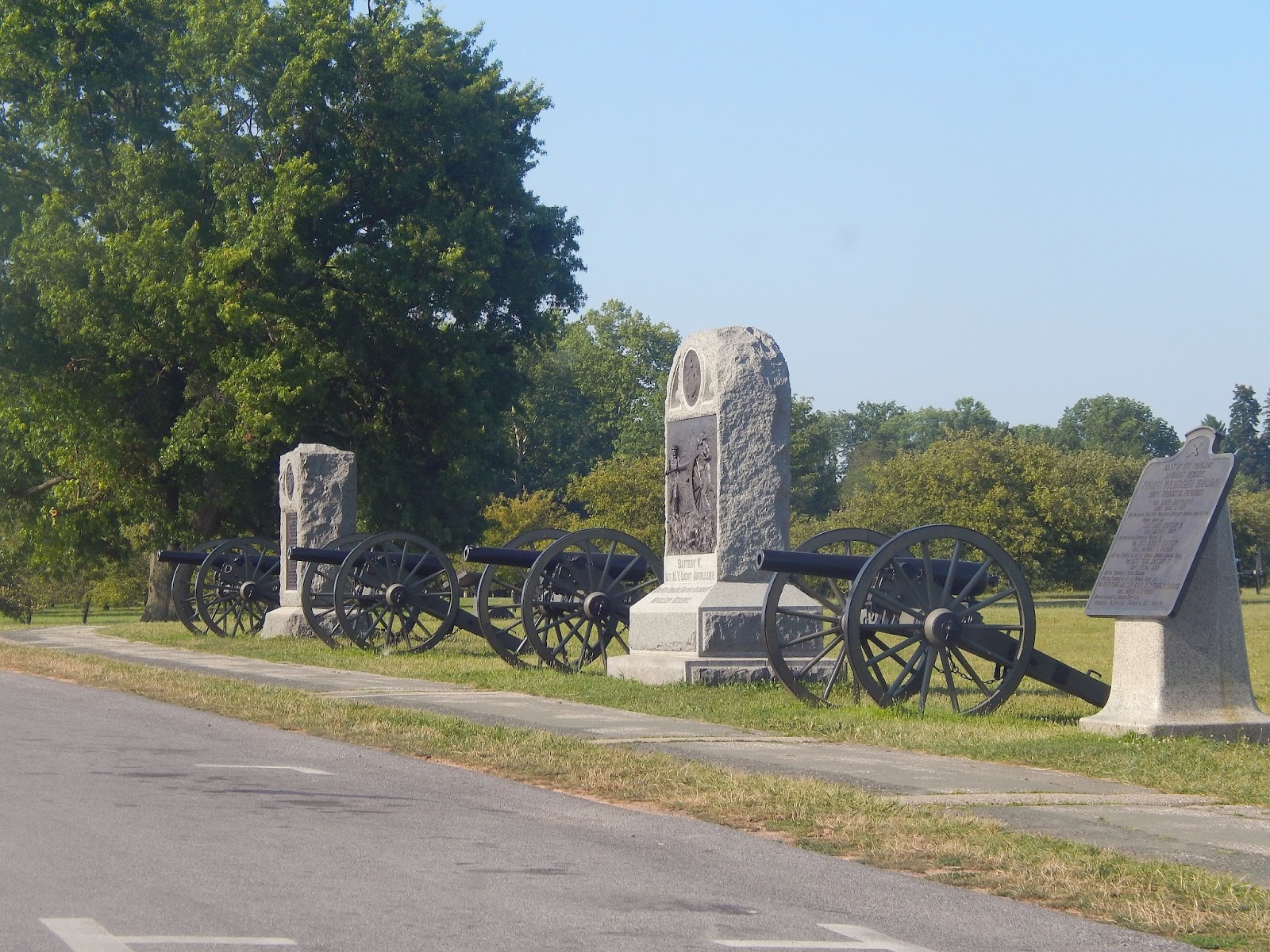
We traveled 1,200 miles in four days, and along the way, we met people from all walks of life and walked the streets of a world-class city ― Philadelphia ― the Cradle of Liberty. Gettysburg was worth the 264-mile roundtrip from our hotel in Philly. You don't realize the scope of the battlefields until you take a car tour of sacred ground that is lined with cannon and monuments honoring those who gave the "last full measure of devotion" during a three-day battle that would become the turning point of the Civil War.
We left town for four glorious days to see this nation, and we discovered America still has a lot going for it ― despite a U.S. Congress that is pathetic at best. Jefferson would probably call for another revolution if he saw these clowns in action. What would Ben Franklin say? I bet he would give those 535 bozos an earful and their walking papers. Fellow revolutionary Thomas Paine would have taken advantage of the Internet and fired off a blog demanding an end to Congress's stupidity, never mind its tyranny. But Paine would find instilling "Common Sense" in the minds of this governing body futile.
We felt privileged to visit the stomping grounds our nation's forefathers. Philadelphia, Penn's Landing, the Ben Franklin Bridge and the Delaware River are something to behold. But unlike George Washington, this family crossed the Delaware in a red, rented Chevy Impala, which surprisingly offered a lot of leg room for this 6-foot-3 father.
We immediately developed a kinship with the City of Brotherly Love. I grew up three miles from Boston. I could throw a rock at the Tobin Bridge from my home in Revere. Beantown played a pivotal role in the American Revolution. There were three key events that occurred in Massachusetts: The Tea Party raid (not those rascals who pretend to be Republicans), the Boston Massacre and Paul Revere's ride, and let us not forget the "Shot Heard Round the World" in Concord, Mass.
The rest of this article is broken down into a series of briefs about our excursion through six states.
The Road not taken
Before we plotted our course, we read maps to find the quickest route to Philly, and scoured the Net to find room and board at a reasonable price. We decided a GPS would not be essential. I had one of the best navigators on board― my son, Anthony, who has been studying maps since he was 10. He directed me from the back seat of our rental to the exact point of our destination ― the Wyndham Philadelphia Historic District. We got the room for $95 a night in the heart of Philly's historic sites thanks to Priceline.com. To us, it was a five-star hotel that put us in walking distance of Independence Hall, Penn's Landing and the Liberty Bell, and as an added bonus, an open-air pool on the eighth floor. What a way to view the city's skylines and order drinks with little umbrellas in them.
We thought the best route to follow was to take Interstate 95 South through Maine and then pick up 495 South to the Massachusetts Turnpike. Just before we headed into Springfield, Mass., we turned south on I-84 and raced across Connecticut to pick up I-95 again. We slugged our way through heavy traffic on the Bronx Expressway. We cut through New York City and crossed the George Washington Bridge. From there, we headed down the New Jersey Turnpike. Drivers on this six-lane horror show are like Jedi Knights zipping in out of traffic at supersonic speeds. I feared for our lives as Luke Skywalker wannabes sped past us.
A Bridge Too Far
 |
| Crossing the George Washington Bridge |
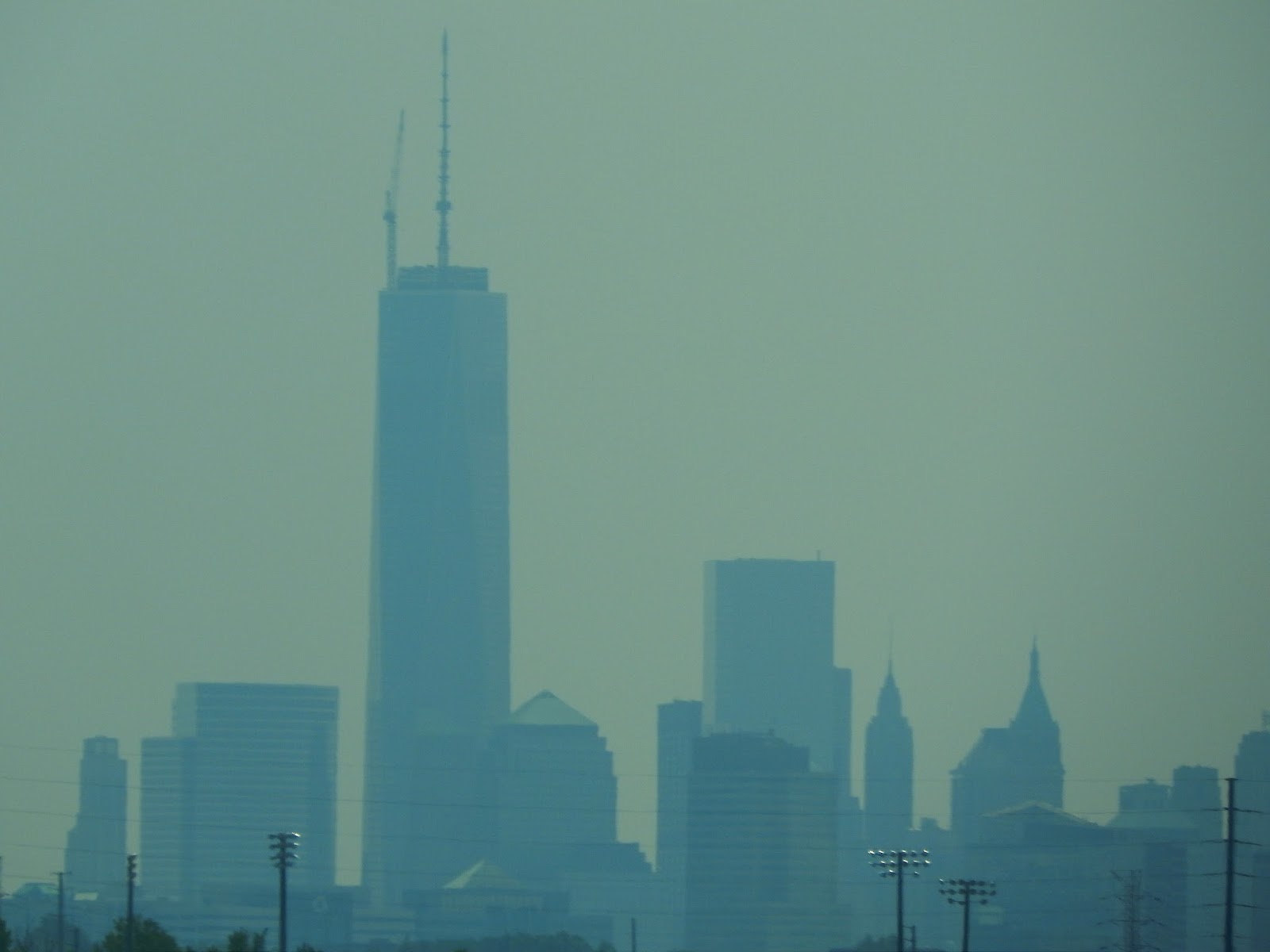
After spending nearly five hours traveling through Maine, Massachusetts and Connecticut, we picked up I-95 again just outside Stamford. Before we reached the George Washington Bridge, we waded through a traffic jam on the Bronx Expressway. The GW was under going repairs and drivers were paying the price. When you see the GW in person, you will be in awe of this engineering feat. Thousands of automobiles pass over this super structure that crosses the Hudson River. The toll won't put a dent in your pocket, but it will make your jaw drop when you shell out $13 to cross the Hudson. The GW was completed in 1931. The toll is a small amount to pay to pass over this behemoth and an opportunity to take a quick glance at a metropolis ― New York City.
 |
| The Ben Franklin Bridge |
We crossed many small bridges in our travels, but besides the GW Bridge, two are really unforgettable. Tourists must cross the Ben Franklin Bridge (completed in 1926) for $5 to get to Philadelphia, but it is another modern marvel and gives you a wonderful view of the city's tall buildings. The Susquehanna River Bridge is special because it crosses that mighty river. We raced over it on our way to Gettysburg.
Walking distance
Staying at the Wyndham hotel turned out to be a wise decision, not because of the price, either. The building was smack dab in the middle of everything we wanted to see. Driving in downtown Philly would make any Mainer long for the empty back roads of the Pine Tree State.
 |
| Good food at Philadelphia's Bourse |
The first thing we did after our arrival was visit and dine at the Bourse, which means a place of exchange. It is a tall, red building that features stores and several places to sample's Philly's food, although I refused to try a Philly cheese stake. These three hungry souls ate at the Liberty Chicken where a kind, elderly gentleman served three weary travelers just before the Bourse closed. It was a scrumptious meal. The Bourse is similar to Faneuil Hall in Boston, but is unique in its own way.
The next day, we fanned out all over downtown Philadelphia. We were just a block away from Independence Hall and the Liberty Bell, but before we dropped in on those two historic sites, we visited Ben Franklin's grave. He lies just behind the Wyndham hotel. There is a tradition of putting pennies on Franklin's grave. Franklin often said: "A penny saved is a penny earned." Terri gave more than just a couple of pennies after change went flying from her open purse. I bet old Ben didn't mind a bit.
 |
| Inside Independence Hall |

After paying our respects to Mr. Franklin, we marched off to the Independence Visitors Center to pick up tickets for a tour of Independence Hall. We were going to visit the Liberty Bell first, but fire alarms went off and we were forced to evacuate the building. But we did get our tickets and headed over to Independence Hall. A U.S. Park Service guide gave visitors a lecture about the hall and the signers of the Declaration of Independence. Walking through these halls and realizing 56 men committed treason when they signed that document gave me a greater appreciation of their determination. They were from different backgrounds with one cause in mind ― establishing a government where all men are created equal. Many of them paid a heavy price after making a commitment to create a new nation. A few signers were tortured by the British and others lost their wealth after the war and died in poverty. They were amazing men with a vision that came to fruition because of their unwavering commitment, devotion and sacrifice.
We made a change of plans and walked down Pierce Street toward Penn's Landing, which is the waterfront area of Philadelphia and named after the founder of Pennsylvania ― William Penn.
Before we arrived at Penn's Landing, we toured Carpenter's Hall, which was the meeting place for the first Continental Congress. It is like many brownstones in the historic district, and inside, it is an elegant building with high ceilings.
 |
| Inside the Independence Seaport Museum |
Our next stop was a stroll to the Delaware River and tour the Independence Seaport Museum and the Spanish-American War-ear cruiser U.S.S. Olympia and World War II-submarine U.S.S. Becuna, which are docked next the Seaport Museum that maintains these two sea-going titans. If you are fascinated with maritime history and sea exploration, the museum's numerous exhibits will expand your knowledge and satisfy your curiosity.
 |
| Inside the torpedo room of the U.S.S. Becuna |
Anthony's passion for ships and the Maritimes started when he was two years old. He sparked a dream to stand on the decks of the Olympia. His fascination with this pre-dreadnaught U.S. warship has been inspiring. He even built of a model of Dewey's ship. After a long lunch at the Marriott, we headed out in the summer heat. The temperature was hovering around an unbearable 96 degrees. Most of the Northeast was simmering in an unrelenting heat wave. We boarded the Becuna in the searing sun and went below. It was cooler in the submarine, but squeezing through doorways that measured three-and-half feet was excruciating for a man of my size, but seeing the torpedo and engine room made all that deep-knee bending worth it. I will never understand how they get fine men and women to go down in those iron monsters. The narrow openings made me feel like mashed tuna in a can.

An hour later and we climbed aboard the U.S.S. Olympia ― Admiral George Dewey's flagship during the battle of Manilla Bay where his fleet wiped out the Spanish navy. This American cruiser is not a replica, but an actually seagoing piece of history that survives to this day. The museum does a commendable job keeping this ship float. It takes a great deal of money to prevent this wonderful piece of America's history from being scraped or moved to another part of the nation.

What makes this ship unique is its luxurious inside, with its mahogany walls and elegant furniture. Today's warships feature spartan rooms. Dewey travelled in style on his protected cruiser, which is armed with four eight-inch and several five-inch guns and other small armaments. During the battle of Manilla, Dewey uttered the famous phrase, "You may fire when you are ready, Gridley."

Anthony and I often talked about visiting the Olympia. For several years, it was only a dream, but on July 16 a father and son strolled its decks and photographed every inch of this heroic protected cruiser. Some dreams do come true, and I was fortunate to tour this vessel with my son.
We saluted Dewey's ship and left Penn's Landing in dangerous heat. It was a mile back to the hotel, but at the risk of suffering of heat stroke, we hailed a cab. We caught a driver's attention and he pulled over to pick up three sweaty tourists. Our driver was a man named Ali who was originally from Pakistan. He was pleasant and accommodating.
"I was hesitant to stop," said Ali.
"It was written," I told him. We both laughed.
We arrived at the hotel. I told Ali was I grateful that he stopped to give us a lift.
"You are a very entertaining man and you have a lovely family," Ali said.
"That bought you a really good tip," I said.
"Thank you. You are kind," Ali said.
We took a dip in the pool before he headed out for the evening to visit a cosmetic store for Terri and then find the SS United States, the largest passenger ship ever built in this country. It was constructed in 1952. The United States could also be converted to a troop ship in time of war. It is now docked in Philadelphia where money is being raised to restore this monstrosity. And there it was, towering over buildings and looking pretty beat up.
We found the makeup store after an hour search in the financial district. From there, we drove back to Penn's Landing and travelled along the waterfront to find the United States. We took pictures of the beat-up ship that carried celebrities around the world during its heyday. It is one big bastard, and I think worth preserving.

"The last full measure of devotion."
We travelled along the Pennsylvania Turnpike and passed through Lancaster, also know as Amish Country. My wife has a fascination with the Amish, which I can't explain.


Before you make numerous stops on the tour, tourists should check in at the Gettysburg National Military Park Museum and Visitor Center to get your bearings and put a dent in your wallet at the gift shop. But it is worth forking over the $50 to see "A New Birth of Freedom," narrated actor Morgan Freeman, and the Gettysburg Cyclorama, which is a huge, circular painting of Pickett's Charge.

We took the car tour and made dozens of stops to read the monuments, which included a huge stone figure that marked the spot where Union Gen. John Reynolds fell after being killed by a Confederate sniper We climbed two observatories that overlook the battlefields in the intense heat. Little and Big Roundtop are clearly visible from one of these towering, iron platforms. But if you hate climbing stairs in the summer heat, you might be better off keeping your feet on the ground and remain in an air-conditioned car.


This family from Maine visited Little Roundtop where Maine Congressional Medal Honor Winner Gen. Joshua Chamberlain and the 20th Maine turned away the Rebels with a bayonet charge with empty muskets. The 20th was out of ammunition but would not reliquish the high ground and allow the Rebs to sweep around the Union lines. Chamberlain was also a four-term governor of the Pine Tree State and president of Bowdoin College. His home is in Brunswick, Maine, and is still open to the public. Visiting Little Roundtop meant running into Maine Gov. Paul LePage. Go figure! He was there, along a group of servicemen, honoring the 20th Maine, but one of the soldiers did thank us from coming all the way from the Pine Tree State to honor Chamberlain's heroes.
We spent six hours at the park, but I believe it really takes an entire day to appreciate what transpired at Gettysburg.
The voyage home
It was difficult leaving Pennsylvania, but we accomplished an objective to visit the Olympia and Gettysburg. I often thought of my mother as we passed through the Allegheny Mountains. My mom spent many summers in Waterford, Penn. I am lucky I had two fine people to tour Philadelphia. We raced home and stopped off to visit my sister in central Massachusetts. Nothing like a home-cooked meal and a visit with family to give us a much-needed break from all that driving.
I guess I would suggest to all Americans, especially this Congress, to visit Philly, stand on the decks of the U.S.S. Olympia, wander Independence Hall and take a picture beside the Liberty Bell.
Why?
These national treasures are reminders of a nation that was created when 56 remarkable men demonstrated their audacity and courage to create a better world for the greater good and go on to forge the greatest living document in the world ― the United States Constitution. Like our Constitution, America is still and always be a work in progress.
And to think all it took was a 1,200-mile road trip and an opportunity to rock the Cradle of Liberty to remind ourselves that we are indeed a nation of hope.